
Get In Touch
- Phone 0321-6775087
- Email iqwrite095@gmail.com
- Address Multan, Punjab, Pakistan
- Follow us

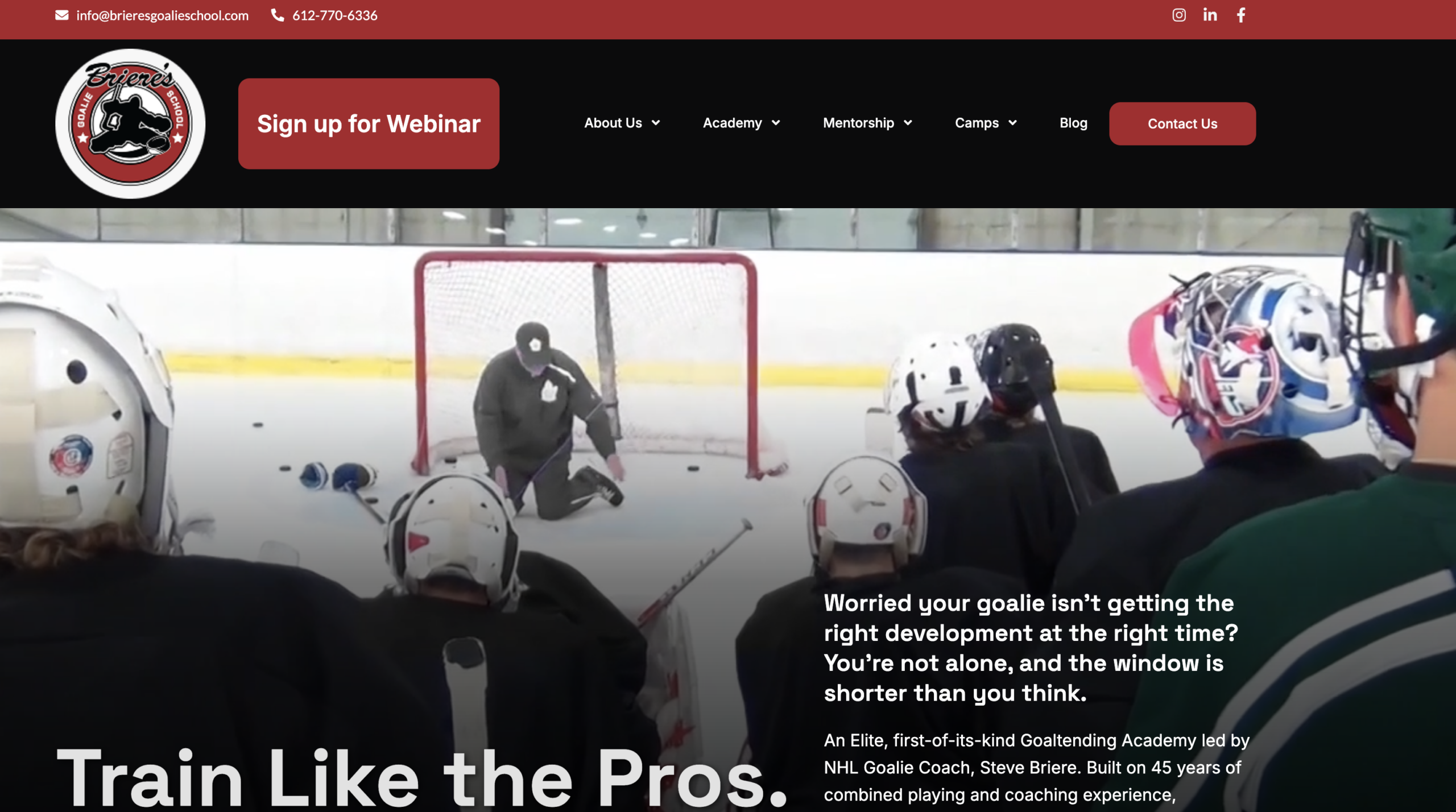
Building an SEO Keyword Strategy From Scratch for NHL Goalie Coach Steve Briere’s UnLock Goaltending Program
When I took on the SEO work for UnLock Goaltending, I wasn’t optimizing an existing strategy. I was building one from nothing.
The brand behind the site is a serious one. UnLock Goaltending was founded by Steve Briere, a veteran NHL goaltending coach who spent seven seasons with the Toronto Maple Leafs and now coaches goaltenders for the Seattle Kraken. The platform brings together NHL-level coaches and specialists to deliver on-ice training, off-ice/dryland work, vision training, and mental-strength coaching to goalies of all ages, along with team-focused solutions for coaches and organizations.
What the site didn’t have was any structured SEO foundation. No defined target keywords. No local search strategy. No mapping between what people were actually searching for and the service pages meant to answer them. That’s the gap I was brought in to close, and it took roughly 57 hours of dedicated research to do it properly.
The Challenge of Starting With Nothing
There’s a specific kind of difficulty in SEO work when there’s no prior data to lean on, no existing keyword list to refine, no historical rankings to learn from, no baseline at all. Every target term had to be found, validated, and categorized from the ground up.
A few things made this project harder than a typical keyword refresh:
- Goaltending is a niche vertical. There’s far less existing keyword research to reference compared to broader sports or fitness categories.
- The audience splits two ways. Some people are searching locally for in-person coaching, camps, and clinics. Others are searching nationally or globally for an online mentorship program. Those are two very different search behaviors living on the same site.
- Multiple service lines, multiple intents. On-ice training, off-ice training, vision training, mental strength coaching, and team solutions for coaches each attract their own kind of searcher.
- A founder’s personal brand had to be balanced against the business. Steve Briere’s NHL pedigree — Toronto Maple Leafs, Seattle Kraken — is a real search draw on its own, but the keyword strategy couldn’t lean so hard on his name that it crowded out the service-based terms the rest of the business needed to rank for.
Where the Research Actually Went
Discovery and service audit first. Before touching a single keyword tool, I went through every service line on the site — the mentorship program, on-ice training, off-ice training, vision training, mental strength coaching, and team solutions — to understand what search intent each page would eventually need to own.
Local keyword research. Goaltending coaching gets searched the way a lot of youth sports services do: by parents and players looking for something nearby. That meant building out geo-modified terms like “goalie coach near me” and “hockey goaltending camp [region],” identifying the regional youth and junior hockey hubs where demand is concentrated, and accounting for how local intent shifts by season — camp season, clinic season, tryout prep, off-season training. There was no single city to anchor this around; the audience is national but clustered around hockey-dense markets, so the research had to reflect that spread.
Core and national keyword research. In parallel, I built out the head-term and mid-tail keyword set for the online mentorship platform itself — branded terms tied to Steve Briere’s coaching background, category terms for each core offering like online goalie training and virtual goaltending coaching, and long-tail terms tied to what actually differentiates the program, like goalie vision training and mental strength training for goaltenders.
Competitor and SERP gap analysis. I looked at how other goalie schools and coaching programs were structured for search, which surfaced keyword categories that were underserved industry-wide — and where UnLock Goaltending’s NHL-level credibility gave it a real edge worth targeting directly.
Categorization and mapping. Every keyword was sorted by intent — local/near-me, national, branded, informational — and mapped to the page best suited to target it. That mapping is the first structured keyword-to-page framework the site has had.
A Sample of the Keyword Framework
| Keyword | Intent Type | Search Focus |
|---|---|---|
| goalie coach near me | Local | In-person coaching discovery |
| hockey goaltending camp [region] | Local | Seasonal camps/clinics |
| youth goalie training [city] | Local | Youth/junior audience |
| online goalie training program | National | Mentorship platform |
| NHL goalie coaching mentorship | Branded/National | Founder credibility |
| goalie vision training | Service/Long-tail | Vision Training page |
| mental strength training for goalies | Service/Long-tail | Mental Strength page |
| off ice training for hockey goalies | Service/Long-tail | Off-Ice Training page |
| goalie coach for youth hockey teams | Local + Team | Team Solutions page |
| best goalie skating drills | Informational | Content/blog opportunity |
What Came Out of It
The deliverables from this phase were:
- A categorized master keyword list spanning both local and national search intent
- A keyword-to-page map aligned to every service line on the site
- A repeatable research framework the client can extend as new pages or content get added
Why This One Stuck With Me
Most SEO engagements involve improving something that already exists. This one didn’t have that luxury — the keyword strategy, the local/national split, and the mapping structure all had to be built from a blank slate. Working with someone at Steve Briere’s level also added a layer most projects don’t have: the research had to respect his personal credibility as a search asset without letting it overshadow the broader service offering the business actually needs to rank for. Getting that balance right, from zero, is what made the 57 hours worth it.